

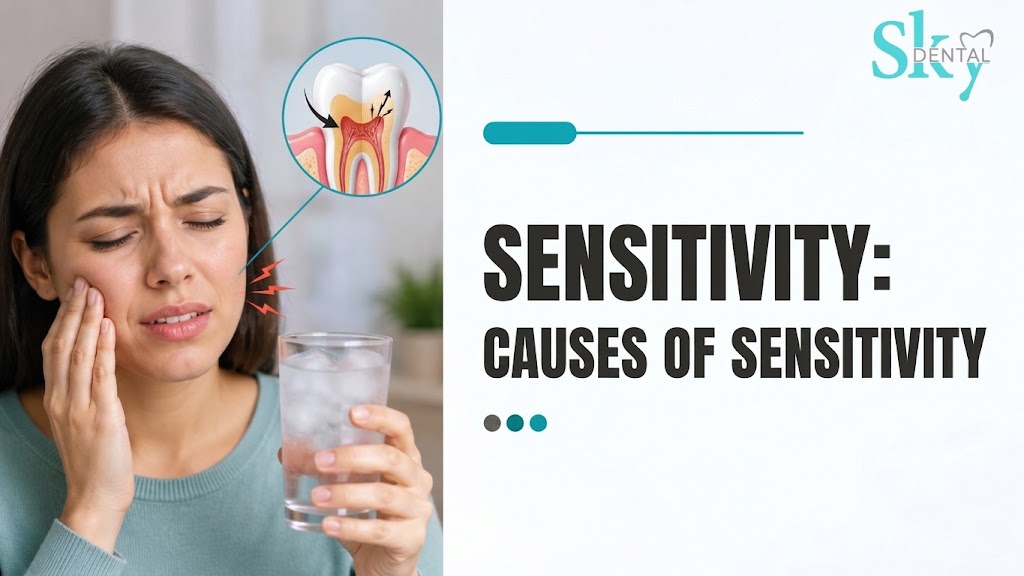
Tooth sensitivity is a common dental problem that can cause a sharp, sudden sensation when you eat or drink something hot, cold, sweet, or acidic. Causes of sensitivity can include worn tooth enamel, exposed tooth roots, gum recession, tooth decay, cracked teeth, teeth grinding, and certain dental treatments. While occasional sensitivity may not be serious, frequent or severe sensitivity can sometimes indicate an underlying dental problem.
What Is Tooth Sensitivity?
To understand tooth sensitivity, it helps to know a little about the structure of a tooth. The outer layer is called enamel, which protects the softer layer underneath called dentin. Dentin contains tiny channels that lead toward the inner part of the tooth, where the nerves are located.
When enamel wears away or the gums move away from the teeth, dentin can become exposed. Hot, cold, sweet, or acidic substances can then affect these tiny channels and stimulate the nerves, causing the sudden pain associated with sensitivity.
Causes of Sensitivity
There are several possible causes of sensitivity, and identifying the cause can help determine the right treatment.
Enamel Wear
One of the most common causes is the gradual wearing away of tooth enamel. Brushing your teeth too aggressively, using a hard-bristled toothbrush, or frequently consuming acidic foods and drinks can contribute to enamel erosion.
Gum Recession
Your gums normally cover and protect the roots of your teeth. When gums recede, parts of the tooth root can become exposed. Tooth roots do not have the same strong enamel covering as the visible part of a tooth, making them more sensitive to temperature and certain foods.
Tooth Decay
A cavity can cause sensitivity when decay breaks through the enamel and reaches deeper layers of the tooth. Sensitivity caused by decay may become more noticeable as the cavity becomes larger.
Cracked or Damaged Teeth
A cracked tooth can cause sharp pain or sensitivity, particularly when chewing or consuming hot or cold foods. Even a small crack can allow temperature changes to affect the sensitive inner parts of the tooth.
Teeth Grinding
Grinding or clenching your teeth, especially during sleep, can gradually wear down enamel. Over time, this may expose dentin and make your teeth more sensitive.
Dental Procedures
Some people experience temporary sensitivity after dental treatments such as fillings, teeth cleaning, crowns, or teeth whitening. This usually improves with time, but persistent or worsening sensitivity should be checked by a dentist.
How Can You Reduce Tooth Sensitivity?
Use a soft-bristled toothbrush and brush gently rather than applying excessive pressure. Fluoride toothpaste can help strengthen enamel, while toothpaste specifically designed for sensitive teeth may help reduce discomfort over time.
Limiting acidic foods and drinks can also help protect your enamel. If you consume acidic beverages, drinking water afterward can help reduce the amount of acid remaining in your mouth.
If you regularly grind or clench your teeth, speak with a dentist. They may recommend a suitable mouthguard or other treatment depending on the cause.
When Should You See a Dentist?
Occasional mild sensitivity may not be a major concern, but persistent, severe, or worsening sensitivity should not be ignored. A dentist can check for cavities, gum recession, cracks, enamel damage, or other dental problems.
If sensitivity affects only one tooth, causes significant pain, or is accompanied by swelling or a persistent toothache, arrange a dental examination.
Conclusion
Tooth sensitivity can result from several dental problems, including enamel wear, gum recession, cavities, cracked teeth, teeth grinding, and recent dental procedures. Understanding the causes of sensitivity can help you take appropriate steps to protect your teeth and maintain good oral health. If sensitivity continues or becomes painful, consult a dentist to identify the underlying problem and receive suitable treatment.