

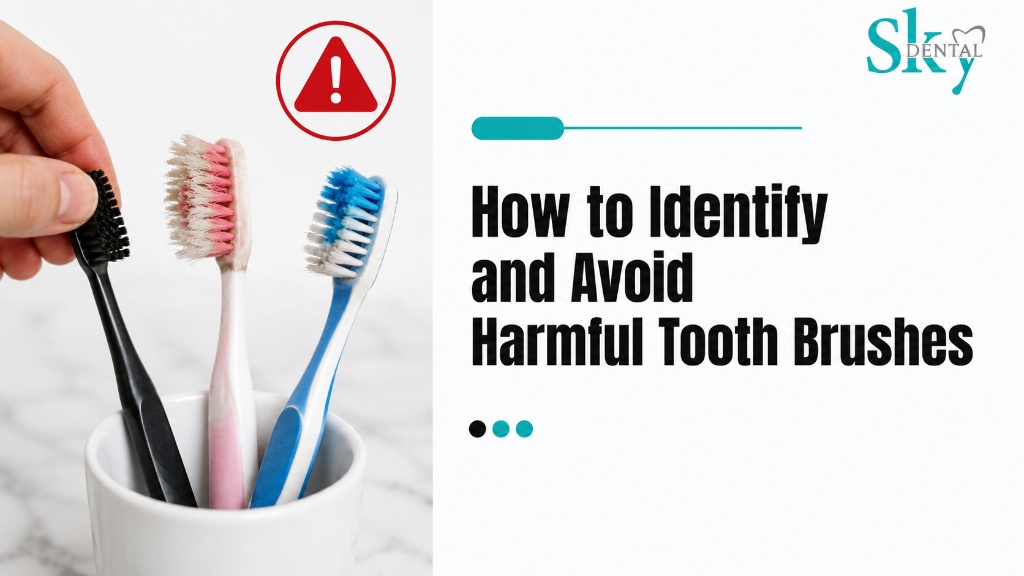
Choosing the right toothbrush is an important part of maintaining healthy teeth and gums. However, many people unknowingly use harmful tooth brushes that can damage the gums, wear down tooth enamel, and cause sensitivity over time. A toothbrush does not need hard bristles or complicated features to clean your teeth effectively. In fact, the wrong type of toothbrush, combined with aggressive brushing, can do more harm than good.
What Makes a Toothbrush Harmful?
A toothbrush can become harmful when its design or condition causes unnecessary damage to your teeth or gums. One of the biggest problems is using bristles that are too hard. Many people believe that harder bristles provide a deeper clean, but this is not necessarily true.
Hard bristles can scrape against the gums and tooth surface, especially when combined with excessive pressure. Over time, aggressive brushing may contribute to gum irritation, gum recession, and wear near the gumline.
Choose Soft or Extra-Soft Bristles
For most people, a soft-bristled toothbrush is a good choice. Soft bristles can remove plaque and food particles effectively without unnecessarily damaging the gums when used with proper brushing technique.
- Soft bristles: Suitable for most people.
- Extra-soft bristles: May be more comfortable for people with sensitive gums or teeth.
- Hard bristles: Can be too abrasive, particularly when used with excessive force.
The goal is not to scrub your teeth as hard as possible. Gentle and thorough brushing is generally more effective than aggressive brushing.
Look for Smooth and Rounded Bristle Tips
Not all toothbrush bristles are manufactured equally. A good toothbrush should have smooth, well-finished bristle tips that are gentle on the gums. Rough or poorly finished bristles may feel uncomfortable and can irritate soft gum tissue.
When buying a toothbrush, choose one from a reliable manufacturer and avoid brushes that feel excessively rough or poorly made.
Choose the Right Toothbrush Head Size
A toothbrush head should be small or medium enough to comfortably reach all areas of your mouth. A head that is too large can make it difficult to clean the back teeth and areas near the gumline.
A smaller toothbrush head can provide better control and make it easier to reach difficult areas, including the back molars.
How to Recognize Harmful Tooth Brushes
Some harmful tooth brushes may not appear dangerous at first, but they can become problematic because of their bristle stiffness, poor design, or worn-out condition.
You may want to avoid or replace a toothbrush if:
- The bristles feel excessively hard or painful on your gums.
- The bristle tips appear rough or uneven.
- The toothbrush head is too large to comfortably reach your back teeth.
- The bristles have become bent, frayed, or spread outward.
- Using the toothbrush consistently causes discomfort when you brush.
Do Not Use a Worn-Out Toothbrush
Even a good toothbrush can become ineffective after prolonged use. Over time, the bristles lose their shape and become bent or frayed. Worn bristles may not clean as effectively and can make brushing less comfortable.
It is generally recommended to replace your toothbrush or toothbrush head regularly, often around every three months, or sooner if the bristles become visibly worn.
Manual vs. Electric Toothbrushes
Both manual and electric toothbrushes can be effective when used properly. A manual toothbrush is often sufficient if you use gentle pressure and clean all areas of your mouth thoroughly.
An electric toothbrush may be useful for people who struggle with brushing technique or tend to apply too much pressure. Some electric toothbrushes also include pressure sensors that alert you when you are brushing too aggressively.
Proper Brushing Technique Matters
Even the best toothbrush can cause problems if it is used incorrectly. Avoid aggressively scrubbing your teeth back and forth with excessive force. Instead, use gentle pressure and carefully clean each area of your teeth and along the gumline.
Using fluoride toothpaste and maintaining a consistent brushing routine are also important parts of good oral hygiene.
Conclusion
The best toothbrush is not necessarily the most expensive or the one with the hardest bristles. A simple toothbrush with soft or extra-soft bristles, smooth bristle tips, and a comfortable head size can be an excellent choice for daily oral care. By avoiding harmful tooth brushes, replacing worn-out brushes regularly, and brushing gently, you can help protect your teeth and gums while maintaining good oral hygiene.