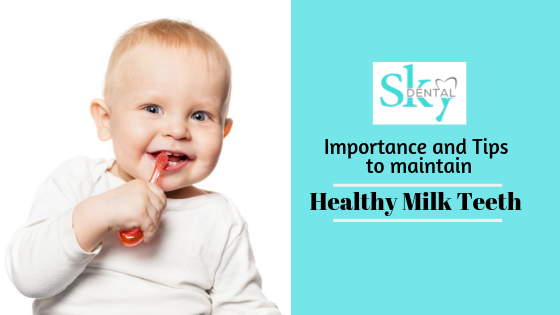
About Milk Teeth:
Milk Teeth are the first set of teeth in the growth development of humans. The primary teeth form during the embryo stage of human life but eventually develop and starts to appear as early as 6 months after birth.
Although milk teeth are temporary, they still need a lot of care and maintenance. If the milk teeth are well looked after, then it is more likely that the permanent teeth will grow in their right position.
Frequently asked questions about Paediatric Dentistry:
1. What’s the best way to take care of your baby’s teeth?
Ensuring Healthy teeth for life begins even before the first tooth appears. Start by wiping your baby’s gums gently in circular motions after feeding to help reduce the bacteria. As soon as you see a tooth, start brushing the teeth using a toothbrush with soft bristles and a small head.
2. How do I avoid my child from getting rotten teeth?
Baby tooth decay results from leftover sugar sticking to the teeth. The sugar becomes acidic
and can then break down the enamel. This sugar can come from residual milk, juice, or any
other food left in the mouth after eating. Here are some tips to help avoid a decayed tooth.
a) Establish good brushing habits
b) Avoid giving sugary foods and drinks
c) Serve Calcium-rich foods
d) Avoid giving frequent snacks
e) Avoid bottle rot (Baby bottle tooth decay or “bottle rot” occurs when a baby drinks
frequently during the day from a bottle, or is put to bed with a bottle, filled with
formula, milk, juice, soft drinks, sugar water, or sugary drinks.)
f) Treat Signs of Decay Early.
3. Baby teeth eventually fall out, so why is dental care so important?
Even though your child will lose his milk teeth, proper care for them, including fillings,
coatings, and extraction of teeth that have died, are all part of ensuring that the teeth
underneath and the jaw develops well and stays healthy.
4. Is teething painful?
Yes. When babies are teething, they often have sore and tender gums. The pain can usually soothe by gently rubbing the baby’s gums with a clean finger or any other safe products.
5. Are pacifiers bad for my child?
Not really. If they are used for a limited time, they are sort of beneficial. A pacifier might help reduce the risk of Sudden Infant Death Syndrome (SIDS). Sucking on a pacifier during naptime and bedtime might reduce the risk of SIDS. A child should not use any kind of pacifier beyond about age 4 because it could be a hindrance in the development and growth of permanent teeth.
This article is intended to promote understanding of and knowledge about general oral health topics. It is not intended to be a substitute for professional advice, diagnosis or treatment. Always seek the advice of your dentist at dental hospital qualified healthcare provider with any questions you may have regarding a medical condition or treatment.
About Milk Teeth: Milk Teeth are the first set of teeth in the growth development of humans. The primary teeth form during the embryo stage of human life but eventually develop and starts to appear as early as 6 months after birth. Although milk teeth are temporary, they still need a lot of care and …
FAQs on Child dental care: All you need to know Read More »
The term ‘Root Canal’ can refer to as the inner part (passage) of the tooth between the pulp and the tooth roots. The root canals contain nerves and blood vessels. Once an adult tooth have emerged, the only purpose the nerves sense is reacting to the stimuli. Hence, in the procedure of Root Canal Treatment, …
How Do I Know If I Need A Root Canal Treatment? Read More »
When it comes to your teeth, you really are what you eat. Food are vitally important for our oral health. Even if you have a perfect oral hygiene routine it might be hard to keep your teeth healthy, if you don’t watch what you eat. So, some of the healthy foods to improve your diet …
Good Food For Strong & Healthy Teeth! Read More »
Have you been told by your dentist that you need to get a Root Canal Treatment? And did you fear at thought of getting it done? Relax, you aren’t one. There are often many misconceptions about Root Canal Treatment. The inaccurate information about root canal treatment prevents patients from making a sane decision regarding their …
5 Common Myths About Root Canal Treatment Read More »
What are Cavities? ‘Dental Cavities’ is another term for Tooth Decay. Cavities are holes that form in your tooth due to lack of Oral hygiene. Our Teeth are covered with a hard, protective top layer called enamel. But once the enamel is weakened by acids produced by bacteria, a pit or a cavity is …
HOW TO GET RID OF CAVITIES? Read More »
Do the foods you choose and eat can affect your teeth and gum health? Of course, if you consume too many sweetened sodas and sugar-filled fruit drinks, you could be at risk of tooth decay. Even though brushing and flossing daily are essential but nutrition has an immense effect on your dental health. Eating a …
Diet for Oral Health Read More »
Suffering from Bad breath? Admit it! Everyone gets irritated from it as it is one of life’s most common annoyances. Bad Breath (bad smell from the mouth), medically called halitosis can be caused by the maintenance of poor dental health habits and sometimes may be a sign of other health problems. It can also …
Tips to avoid Bad Breath Read More »