

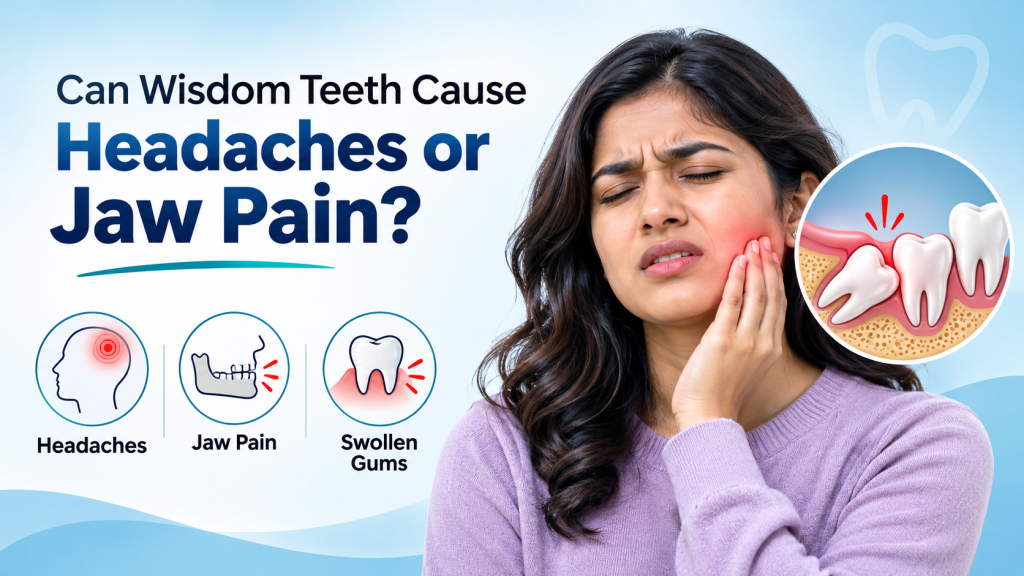
Can Wisdom Teeth Cause Headaches or Jaw Pain?
If you are experiencing frequent headaches, pain around your ears, or difficulty opening your mouth, you may wonder whether your wisdom teeth are responsible. In some cases, wisdom teeth cause headaches or jaw pain due to impaction, gum inflammation, infection, or pressure on surrounding tissues. Wisdom teeth are the final set of molars to emerge, usually between the ages of 17 and 25. When there is insufficient space for them to erupt properly, they can cause pain, swelling, and discomfort.
However, not all headaches or jaw pain are related to wisdom teeth. Understanding the possible causes and recognising the symptoms can help you determine when to seek professional dental care.
What Are Wisdom Teeth?
Wisdom teeth are the third molars located at the very back of your mouth. Most people develop up to four wisdom teeth, although some may have fewer or none at all.
When sufficient space is available, wisdom teeth can erupt normally and settle into their correct positions. However, some teeth become impacted, meaning they remain partially or completely trapped beneath the gums or jawbone.
Impacted or partially erupted wisdom teeth can cause pain, swelling, and inflammation. The risk of discomfort increases when bacteria and food particles become trapped around the affected tooth, potentially leading to infection.
How Can Wisdom Teeth Cause Jaw Pain?
There are several reasons why wisdom teeth may contribute to jaw pain and discomfort. The most common causes include impaction, gum infections, and tension in the surrounding jaw muscles.
1. Impacted Wisdom Teeth
Wisdom teeth can become impacted when there is insufficient space for them to erupt properly. This can create pressure on the surrounding gums, teeth, and tissues, resulting in pain at the back of the jaw.
You may experience tenderness, difficulty chewing, and discomfort when opening your mouth widely. The pain may become more noticeable when eating hard or chewy foods.
2. Swollen or Infected Gums
When a wisdom tooth partially erupts, a small pocket can develop around the gum tissue. Food particles and bacteria may become trapped in this area, causing an infection known as pericoronitis.
Common symptoms include:
- Swollen or red gums around the wisdom tooth.
- Pain and tenderness near the back molars.
- Bad breath or an unpleasant taste in the mouth.
- Difficulty chewing or opening your mouth.
- Swelling around the jaw or cheek.
3. Jaw Muscle Tension
Wisdom tooth discomfort may cause you to change the way you chew or hold your jaw differently. This can place additional strain on the surrounding muscles and lead to jaw pain.
However, jaw muscle discomfort can also result from teeth grinding, stress, or temporomandibular joint (TMJ) disorders. A dental examination can help identify the actual cause.
Can Wisdom Teeth Cause Headaches?
Yes, wisdom teeth problems can sometimes contribute to headaches, particularly when there is significant inflammation, infection, or discomfort around the jaw.
Dental pain originating near the back molars may be felt in nearby areas, including the temples, ears, and sides of the head. Tension in the jaw muscles may also contribute to headache symptoms.
Understanding how wisdom teeth cause headaches or jaw pain is important, but it is equally important to recognise that headaches can have several other causes, including:
- Migraines.
- Tension headaches.
- Sinus infections or sinus pressure.
- Teeth grinding (bruxism).
- Temporomandibular joint (TMJ) disorders.
If you experience frequent or persistent headaches, do not automatically assume that your wisdom teeth are responsible. Consult a dentist or healthcare professional for an accurate diagnosis.
Common Symptoms of Wisdom Tooth Problems
If your wisdom teeth are contributing to headaches or jaw discomfort, you may notice one or more of the following symptoms:
- Pain or tenderness at the back of your mouth.
- Swollen or red gums around the back molars.
- Jaw pain while eating or opening your mouth.
- Bad breath or an unpleasant taste.
- Pain spreading towards your ears or temples.
- Difficulty opening your mouth completely.
- Swelling around your jaw or cheeks.
These symptoms may indicate an impacted wisdom tooth or an infection. Visiting your dentist can help determine the underlying problem.
When Should You See a Dentist?
Occasional discomfort does not necessarily mean that your wisdom teeth need to be removed. Your dentist will examine your mouth and may recommend dental X-rays to check the position of your wisdom teeth and identify possible complications.
Consider booking a dental appointment if you experience:
- Regular pain around your wisdom teeth.
- Persistent jaw discomfort.
- Swollen or bleeding gums.
- Repeated infections around partially erupted teeth.
- Difficulty chewing or opening your mouth.
If you experience facial swelling, fever, pus, or difficulty opening your mouth, seek prompt dental or medical attention. Difficulty swallowing or breathing requires emergency medical care.
Treatment Options for Wisdom Tooth Pain
The appropriate treatment depends on the position of the wisdom tooth, the severity of the symptoms, and whether an infection or other dental problem is present.
1. Professional Cleaning
If food particles and bacteria accumulate around a partially erupted wisdom tooth, your dentist may clean the affected area. They can also recommend appropriate oral hygiene techniques to reduce the risk of further infection.
2. Medications
Your dentist may recommend suitable pain-relief medication to manage discomfort. Antibiotics are generally prescribed only when there is a specific clinical indication of bacterial infection or spreading infection.
Avoid taking antibiotics without professional advice.
3. Wisdom Tooth Extraction
If a wisdom tooth repeatedly causes infections, damages neighbouring teeth, or creates persistent problems due to impaction, your dentist may recommend extraction.
However, not every wisdom tooth needs to be removed. Healthy wisdom teeth that are properly positioned and do not cause problems can often be monitored through regular dental check-ups.
Can You Prevent Wisdom Tooth Pain?
You cannot control the direction or position in which wisdom teeth erupt. However, maintaining good oral hygiene can help reduce the risk of gum inflammation and infection.
Follow these preventive measures:
- Brush your teeth twice daily using fluoride toothpaste.
- Clean the back molars carefully to remove food particles.
- Floss regularly or use an interdental cleaning method recommended by your dentist.
- Attend regular dental check-ups.
- Seek dental advice if you notice pain, swelling, or discomfort around your wisdom teeth.
Never place aspirin directly on your gums to relieve tooth pain. Avoid self-medicating with antibiotics.
Conclusion
Wisdom teeth can contribute to headaches and jaw pain when they become impacted, cause gum inflammation, or create tension in the surrounding jaw muscles. However, headaches and jaw discomfort can also have other underlying causes, so an accurate dental examination is essential.
If you are experiencing persistent headaches, jaw pain, swollen gums, or discomfort around your back molars, consult your dentist for an appropriate evaluation. Understanding how wisdom teeth cause headaches or jaw pain can help you recognise potential warning signs and seek timely treatment to maintain your long-term oral health.