

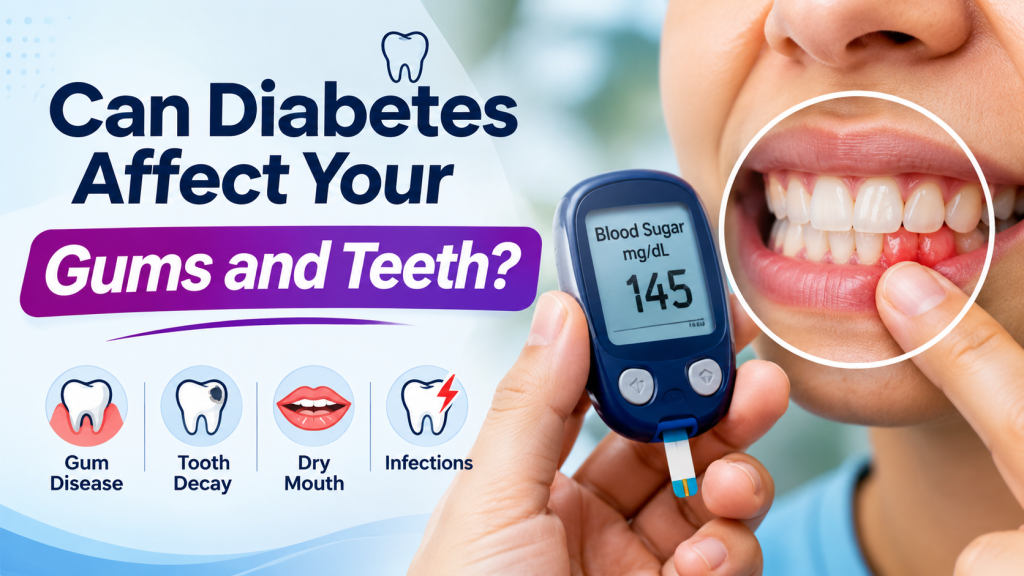
Knowing how diabetes affects your oral health can help you protect your teeth and gums and maintain better overall health.
1. How Can Diabetes Cause Issues With Oral Health?
Diabetes affects how your body manages blood sugar. When blood glucose levels remain high, your body may find it harder to fight infections and heal damaged tissues.
Some common dental problems include:
- Higher risk of gum disease: High blood sugar levels can make it harder for your body to fight gum infections.
- Dry mouth: Reduced saliva production can increase the risk of tooth decay.
- Slow healing: Your gums may take longer to heal after an injury or dental treatment.
- Increased risk of infections: Fungal infections such as oral thrush may become more common.
However, not everyone with diabetes experiences these problems. Managing blood sugar levels and attending regular dental appointments can help reduce the risks.
2. Why Am I More Likely to Suffer From Gum Disease?
Gum disease, also known as periodontal disease, is caused by infection and inflammation of the gums.
Plaque builds up along the gum line and contains bacteria that can irritate your gums. If it is not removed properly, it can cause inflammation and eventually damage the tissues supporting your teeth.
Diabetes can increase the risk of gum disease because high blood sugar levels can weaken the body’s response to infections and increase inflammation.
Common symptoms include:
- Bleeding gums when brushing or flossing.
- Red, swollen or painful gums.
- Persistent bad breath.
- Gums pulling away from the teeth.
- Loose teeth in severe cases.
Gum disease does not always cause pain. Regular dental check-ups can help identify problems early.
3. Can Gum Disease Affect My Diabetes?
Yes. Gum disease can make diabetes more difficult to manage.
People with poorly controlled diabetes are more likely to develop gum disease. At the same time, severe gum inflammation may affect blood sugar control.
This can create a cycle where diabetes increases the risk of gum disease, and gum disease makes blood sugar management more challenging.
Some people may experience improved blood sugar control after treating gum disease. However, dental treatment should never replace diabetes medication or medical care.
4. Can I Get More Tooth Decay?
Yes. Some people with diabetes experience dry mouth because their saliva production decreases.
Saliva helps wash away food particles, neutralise acids and protect tooth enamel. When there is less saliva, the risk of tooth decay can increase.
To protect your teeth:
- Brush twice a day using fluoride toothpaste.
- Clean between your teeth every day.
- Drink plenty of water.
- Limit sugary snacks and drinks.
- Speak to your dentist if you frequently experience dry mouth.
5. What Dental Issues Should I Be Aware Of?
If you have diabetes, watch out for the following oral health problems:
- Bleeding gums: An early sign of gum inflammation.
- Bad breath: May be caused by gum disease or dry mouth.
- Slow-healing mouth ulcers: Persistent ulcers should be checked by a dentist.
- White patches: Could indicate oral thrush.
- Loose teeth: May indicate damage to the tissues supporting your teeth.
These symptoms do not always mean diabetes is the cause. A dental examination can help identify the underlying problem.
6. How Often Should I See My Dentist?
People with diabetes may need different dental appointment schedules depending on their oral health.
If you have gum disease, plaque build-up or other dental problems, your dentist may recommend appointments every 3–6 months. If your oral health is good, your dentist may suggest a different schedule.
During your appointment, your dentist may check:
- Your gums and surrounding tissues.
- Plaque and tartar build-up.
- Signs of tooth decay.
- Dry mouth and oral infections.
- The tissues supporting your teeth.
Always inform your dentist that you have diabetes so they can plan suitable dental treatment.
7. How Can I Look After My Teeth and Gums?
Taking care of your oral health and managing diabetes can help reduce the risk of dental complications.
Follow these simple tips:
- Manage blood sugar levels: Follow your healthcare professional’s advice regarding medication, diet and monitoring.
- Brush regularly: Brush twice daily using a soft-bristled toothbrush and fluoride toothpaste.
- Floss daily: Clean between your teeth using dental floss or suitable cleaning tools.
- Visit your dentist: Attend regular dental check-ups.
- Avoid smoking: Smoking increases the risk of gum disease and can affect treatment.
- Share your medical history: Inform your dentist about your diabetes and medications.
- Watch for warning signs: Seek dental advice if you notice bleeding, swelling, persistent ulcers or loose teeth.
8. When Should I See My Dentist?
If you have diabetes and experience any of the following symptoms, arrange a dental appointment:
- Bleeding gums.
- Persistent bad breath.
- Sensitive teeth.
- Dry mouth.
- Recurring oral infections.
If you experience swollen gums, pus, severe tooth pain or a loose adult tooth, seek dental care as soon as possible. Facial swelling, fever or difficulty swallowing may indicate a serious infection and require urgent medical attention.
Do not stop your diabetes medication without medical advice. If dental problems affect your ability to eat or manage your blood sugar, contact your healthcare professional.
Conclusion: Can Diabetes Affect Your Gums and Teeth?
Understanding how gums affect your teeth is an important part of maintaining good oral health, particularly when living with diabetes. Diabetes can increase the risk of gum disease, dry mouth, tooth decay and oral infections. In turn, severe gum disease may make blood sugar management more difficult.
By maintaining good oral hygiene, managing your blood sugar levels and attending regular dental appointments, you can reduce the risk of dental complications. If you notice bleeding gums, swelling or persistent oral problems, consult your dentist.
Healthy gums and teeth are an important part of your overall health. Make dental care a regular part of your diabetes management routine.