

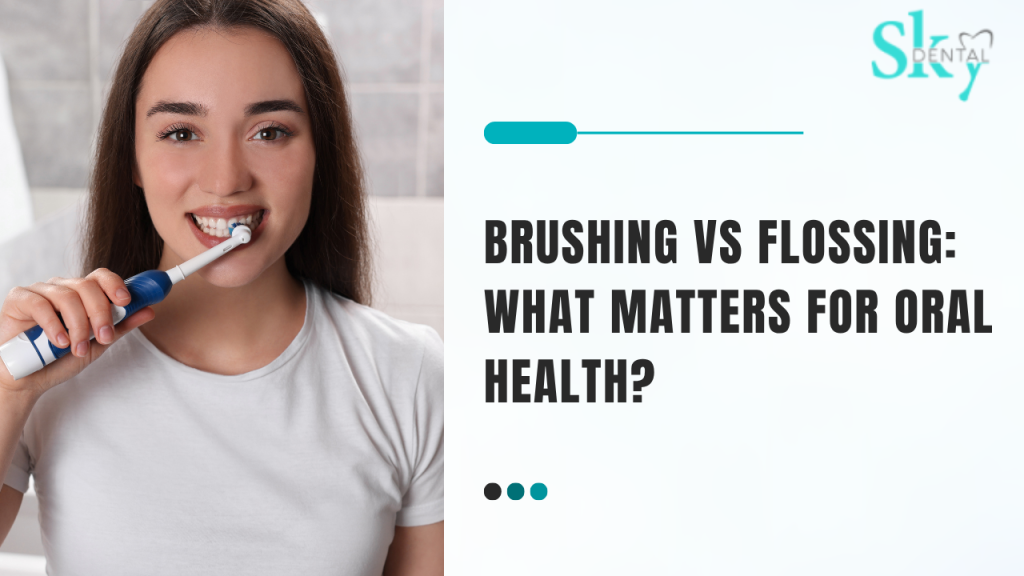
Maintaining good oral hygiene is essential for a healthy smile and overall well-being. While most people understand the importance of brushing their teeth twice a day, many often overlook flossing. This raises a common question: Which is more important—brushing or flossing? The truth is that both play unique and complementary roles in keeping your teeth and gums healthy. Rather than choosing one over the other, understanding how each contributes to oral health can help you build a more effective daily routine. Let us read brushing vs flossing.
The Importance of Brushing
Brushing is the foundation of oral hygiene. Using a soft-bristled toothbrush and fluoride toothpaste, brushing removes plaque, food particles, and bacteria from the surfaces of your teeth. It also helps prevent tooth decay, strengthens enamel, and freshens your breath.
Dentists recommend brushing for at least two minutes, twice a day. Proper brushing reaches the front, back, and chewing surfaces of every tooth while also cleaning the tongue, where bacteria responsible for bad breath often accumulate.
However, brushing alone cannot clean every part of your mouth. Toothbrush bristles are unable to reach the tight spaces between teeth, allowing plaque and food debris to remain trapped.
Why Flossing Is Essential
Flossing targets the areas that brushing cannot reach. Dental floss removes plaque and food particles from between the teeth and just below the gumline, where harmful bacteria often hide. If left untreated, this plaque hardens into tartar, increasing the risk of gum disease and cavities.
Daily flossing provides several important benefits:
- Reduces plaque buildup between teeth
- Helps prevent cavities in hard-to-reach areas
- Lowers the risk of gingivitis and gum disease
- Reduces bad breath caused by trapped food particles
- Promotes healthier gums and less bleeding
People who floss regularly often experience healthier gums and fewer dental problems over time.
Brushing vs. Flossing: Which Is More Important?
The answer isn’t brushing or flossing—it’s brushing and flossing. Brushing effectively cleans approximately 60% of your tooth surfaces, while flossing cleans the remaining areas between your teeth. Skipping flossing leaves a significant portion of your teeth uncleaned, even if you brush perfectly.
Think of brushing as cleaning the visible surfaces of your home, while flossing is like cleaning the corners and hidden spaces where dirt accumulates. Both are necessary for complete cleanliness.
Tips for Better Oral Hygiene
To maintain optimal oral health:
- Brush twice daily using fluoride toothpaste.
- Floss at least once every day.
- Replace your toothbrush every three to four months.
- Limit sugary foods and drinks.
- Drink plenty of water throughout the day.
- Visit your dentist every six months for professional cleanings and check-ups.
Using an antibacterial mouthwash can also provide additional protection by reducing bacteria and freshening your breath.
Final Thoughts
Healthy teeth and gums require more than just brushing. While brushing removes plaque from the visible surfaces of your teeth, flossing reaches the hidden spaces where cavities and gum disease often begin. There is no brushing vs flossing but both of them. Together, they form the foundation of excellent oral hygiene.
Making brushing and flossing part of your daily routine takes only a few extra minutes but can save you from costly dental treatments and painful oral health issues in the future. Remember, the best oral care routine isn’t about choosing one over the other—it’s about using both consistently. A few minutes of proper care each day can help you enjoy a brighter smile, fresher breath, and healthier teeth for years to come.